Social Impact Through Economic Resilience Programs: How the Model Works
TL;DR
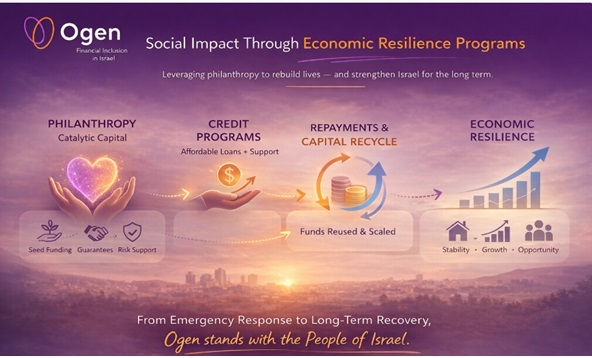
Social impact can be created not only through direct donations but also through structured financial programs that strengthen long-term economic resilience. Many modern social impact models use philanthropy as catalytic capital that is leveraged into lending and credit programs. This approach, often called blended finance or impact investment, allows funds to be reused and scaled over time. Instead of one-time spending, capital supports sustainable financial tools that help individuals and communities stabilize and grow. Understanding how these mechanisms work clarifies how financial structures can generate measurable social outcomes.
What Social Impact Means in Financial Programs
Social impact in financial programs refers to measurable improvements in economic stability, opportunity, and resilience created through structured financial tools. Rather than focusing only on charitable distribution, these models use finance itself as the delivery mechanism for change.
In this context, social impact is achieved when financial structures, such as community lending, resilience funds, or blended capital programs, help individuals and households maintain stability, recover from crisis, or improve long-term earning capacity.
Unlike traditional charity models that measure impact through spending, social impact finance models measure outcomes such as repayment success, financial stabilization, and repeated capital deployment.
How Philanthropy Can Be Leveraged Into Credit Programs
One of the central mechanisms in modern social impact finance is the leveraging of philanthropy into credit activity. Instead of being used only for one-time grants, philanthropic capital can serve as a base layer that supports structured lending programs.
In this model, philanthropic funds help absorb risk, provide guarantees, or seed lending pools. That capital is then deployed as loans under affordability-focused terms. As borrowers repay, the capital is recycled and redeployed, multiplying the long-term impact of the original philanthropic contribution.
This leverage model transforms philanthropy from a one-time spending tool into a renewable impact engine. It also allows programs to operate at greater scale while still maintaining social objectives.
Because of this structure, philanthropy and lending are not separate tracks, they function together inside the same resilience framework.
Blended Finance and Social Impact Investing
Blended finance refers to funding structures that combine multiple types of capital, such as philanthropy, public funding, and private or social investment, within a single program. The goal is to use different risk and return expectations to enable socially beneficial financial activity that would not otherwise occur.
Social impact investing, within this context, describes capital placed into programs that aim to generate measurable social outcomes alongside financial sustainability. Unlike traditional investing, the primary success metric is impact first, with financial return structured to support continuity rather than maximize profit.
Blended finance structures often include:
philanthropic first-loss layers
guarantee mechanisms
low-return social investors
program-related investments
revolving loan funds
These structures allow capital stacks to support resilience-focused lending while maintaining responsible risk controls.
Economic Resilience Programs Explained
Economic resilience programs are designed to help individuals and households withstand financial shocks and maintain stability over time. Instead of focusing only on immediate relief, these programs aim to strengthen financial capacity and reduce vulnerability.
Financial tools used in resilience programs may include:
affordable loan programs
structured repayment plans
stabilization funds
credit access initiatives
community finance vehicles
The defining feature of resilience programs is that they treat access to appropriate financial tools as a stability mechanism - not merely emergency support.
Resilience is measured not only by immediate outcomes but by longer-term indicators such as repayment performance, reduced financial distress, and improved economic continuity.
Community Economic Development Through Lending
Community economic development programs often use lending as a strategic tool to strengthen local financial ecosystems. Instead of relying solely on grants, these programs deploy capital in ways that enable participation, responsibility, and recycling of funds.
Community-based lending models may include:
nonprofit loan funds
social lending pools
cooperative finance structures
mission-driven credit programs
Because repayments return to the fund, the same capital can support multiple cycles of borrowers. This recycling feature increases program durability and long-term reach.
Community lending is typically paired with eligibility screening, affordability safeguards, and structured repayment support to maintain both borrower success and fund sustainability.
Donation Models vs Leveraged Impact Models
Direct donation and leveraged impact models are not opposites - but they operate through different financial mechanisms. Donations are often used for immediate spending, while leveraged models use capital as a base for repeat financial activity.
Understanding the difference helps clarify how philanthropy can function in multiple roles inside impact systems.
Comparison - Direct Donation vs Leveraged Impact Model
Dimension | Direct Donation | Leveraged Impact Model |
Use of funds | Immediate spending | Capital base for lending |
Financial recycling | No | Yes |
Impact duration | Short-term | Long-term |
Mechanism | Grant | Credit & loan programs |
Scale potential | Limited | Expandable |
Leveraged models do not replace donations, they extend their functional lifespan through financial structuring.
How to Evaluate a Social Impact or Economic Resilience Program
When reviewing a social impact or economic resilience program, it is important to look beyond general mission statements and examine how the financial mechanism actually operates. Strong programs are defined not only by their goals, but by their structure, transparency, and capital model.
Key evaluation factors include:
Clarity of financial mechanism - The program should clearly explain how funds are used. Is capital distributed as grants, deployed as loans, or leveraged through blended structures?
Capital sustainability model - Sustainable programs explain how capital is preserved or recycled over time, rather than spent once.
Impact measurement approach - Credible programs define how outcomes are measured, such as financial stabilization, repayment performance, or resilience indicators.
Risk management structure - Look for explanations of guarantees, reserve layers, or underwriting safeguards.
Transparency and reporting - Programs should publish clear information about their funding model and operating principles.
Evaluation should focus on structure and outcomes - not only narrative impact claims.
Common Misconceptions About Impact and Resilience Finance
Social impact finance and resilience funding models are often misunderstood because they combine elements of philanthropy and lending. Clarifying common misconceptions helps readers understand the model more accurately.
Misconception: Social impact finance is the same as charity. While philanthropy often plays a role, impact finance uses structured financial tools, such as loans and blended capital - rather than only grants.
Misconception: Impact investing always seeks market-level returns. Many social impact investment models prioritize social outcomes first and accept lower financial returns to maintain program affordability.
Misconception: Lending contradicts social support goals. In resilience models, lending is used as a stability tool, enabling capital reuse and long-term reach rather than one-time support.
Misconception: These programs replace donations. In many models, philanthropy is the foundation layer that makes structured lending possible.
Clarifying these points strengthens understanding and trust in the model.
Short-Term Relief vs Long-Term Economic Resilience Funding
Financial support programs often differ in time horizon and mechanism. Some are designed for immediate relief, while others are structured for long-term resilience building through financial tools.
Comparison - Short-Term Relief vs Long-Term Resilience Funding
Dimension | Relief Funding | Resilience Funding |
Focus | Immediate needs | Long-term stability |
Duration | Short-term | Long-term |
Typical tools | Grants & aid | Loans & finance programs |
Capital reuse | No | Yes |
Outcome model | Immediate support | Structural stability |
Both models play important roles - but they operate through different financial strategies.
FAQs - Social Impact and Economic Resilience Finance
What is social impact investing?
Social impact investing refers to capital placed into programs or financial structures designed to generate measurable social outcomes alongside financial sustainability. Unlike traditional investing, impact is the primary success metric, while financial return supports program continuity rather than profit maximization.
What is blended finance?
Blended finance is a funding structure that combines different types of capital - such as philanthropy, public funds, and social or private investment - within one program. Each capital layer carries a different risk and return expectation, allowing socially beneficial financial activity to operate at scale.
How does philanthropy create financial impact beyond donations?
Philanthropy can serve as catalytic capital that supports guarantees, first-loss reserves, or lending pools. When used this way, it enables credit programs and capital recycling rather than one-time spending. This expands the long-term impact of philanthropic funds.
What are economic resilience programs?
Economic resilience programs are structured initiatives designed to improve long-term financial stability through tools such as affordable lending, stabilization funds, and community finance models. Their goal is to reduce vulnerability and support sustained economic participation.
How does community economic development funding work?
Community economic development funding uses mission-driven capital to strengthen local financial stability and opportunity. It often includes nonprofit lending, social finance vehicles, and structured credit programs that recycle capital across multiple borrowers.
What is the difference between donation and leveraged impact models?
Donation models typically fund immediate spending with no capital return. Leveraged impact models use capital as a base for financial tools like lending, allowing funds to be repaid and reused. The difference is in financial mechanism and duration of impact.
Can financial tools create long-term social impact?
Yes. When structured properly, financial tools such as affordable loans, blended finance programs, and community lending funds can produce repeatable, scalable social outcomes. Their strength lies in capital reuse and structured support.
Key Takeaways
Social impact and economic resilience programs use structured financial mechanisms, not only donations, to generate measurable social outcomes. By leveraging philanthropy, blended capital, and community lending tools, these models allow funds to be reused and scaled over time. Understanding how impact finance works helps clarify how financial structures can support long-term stability and inclusion. These approaches complement, rather than replace, traditional charitable models.


Comments